Drift check
~1 week · across your current initiative
£2k
from
Brief and backlog review, agent-lane map, drift readout. Ninety minutes with leadership before you commit more budget or timeline.
Leadership wants clarity before going further
You’re already using AI, or you’re about to. Clarical keeps your team on one honest brief, with human checkpoints before work ships.
It looks done. Stakeholders are happy. Nobody notices the intent was quietly rewritten until weeks later.
You hand an agent a brief that’s 90% there. It fills the rest with reasonable guesses. Polished deliverables, wrong substance underneath. In a policy pack, a launch narrative, a client deck, or a codebase: same pattern. We call that spec rot: intent drifts one confident assumption at a time, and leadership only sees it when it’s already live. Not weak models. A missing sign-off at the moments that matter.
Most teams aren’t AI-naive in 2026. They’re AI-active without governance: shadow use in inboxes, one function ahead of the rest, a burned pilot on pause, a board mandate with no sign-off model. Everyone still says go faster, automate more, trust the agent. The cheaper win is fewer rework cycles: one clear brief, a human sign-off before the work runs away.
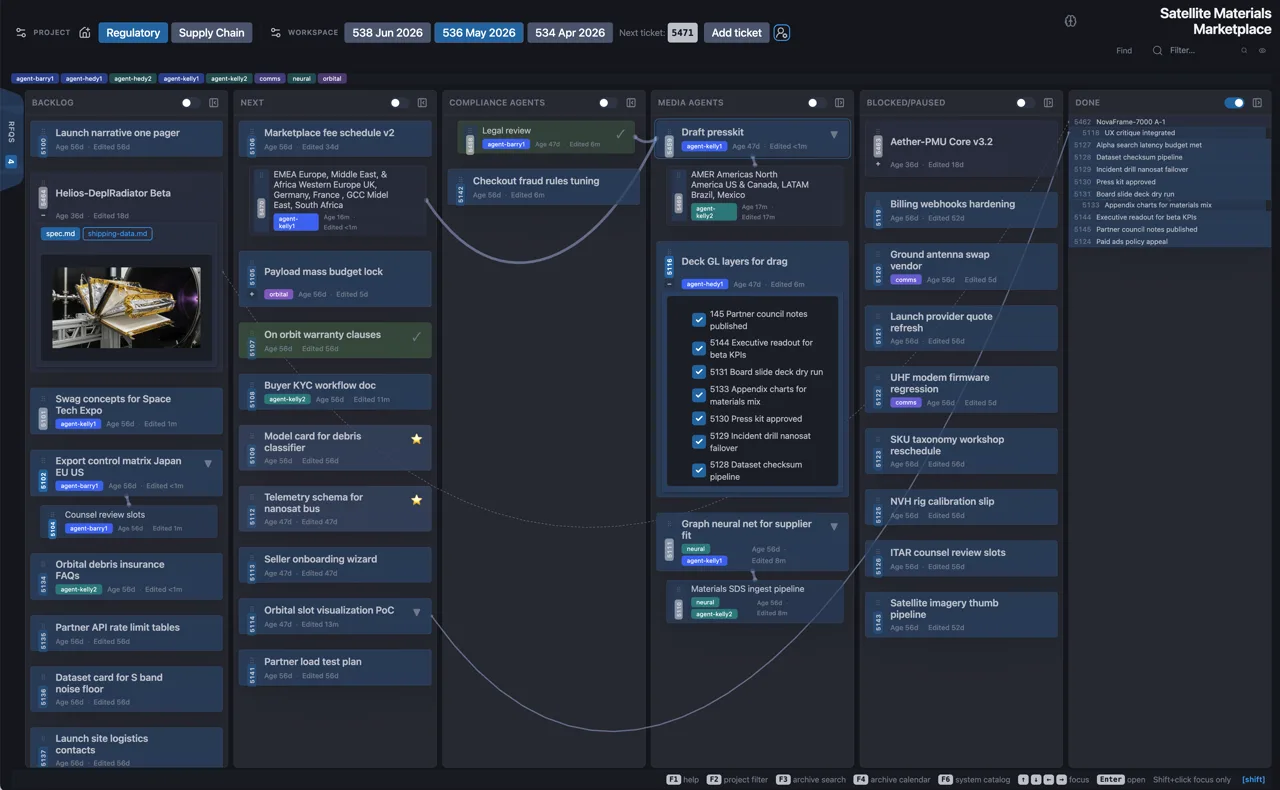
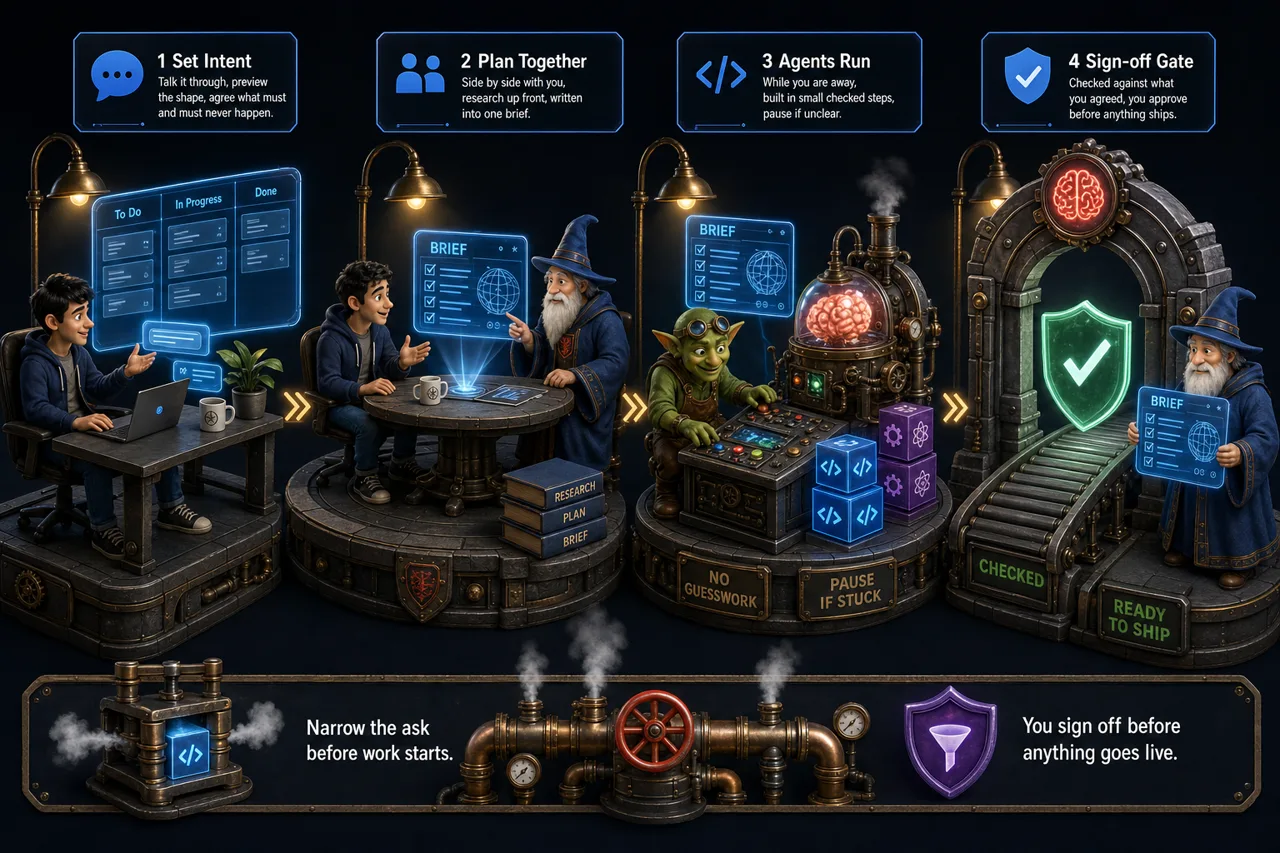
“I built Clarical to enforce verifiable guardrails, one honest brief, human sign-off at the gate, so AI drift is caught before it compounds.”
Clarical was built by a solo founder to survive something much bigger, using the exact method these engagements teach, and what we ship between them. The real dogfood is a large Goblinfactory build we’d love to show here, not yet. You don’t need an engineering department. You need someone who can sign off intent.
We work with one team at a time on these engagements: full attention, not a cohort. Between engagements we build Clarical itself. Bring a live initiative where AI is already touching deliverables, or about to; we’ll agree how deep to go on a short fit call.
~1 week · across your current initiative
£2k
from
Brief and backlog review, agent-lane map, drift readout. Ninety minutes with leadership before you commit more budget or timeline.
Leadership wants clarity before going further
~2-3 weeks · one deliverable stream
£5k
from
One real workstream through the full flow with us beside you: intent, agent work, human gate. You leave knowing where to gate before the work runs away.
One stream that can’t miss: policy, launch, feature, client pack
~4-6 weeks · one critical workstream
£15k
from
We embed on the critical slice of a live initiative: client delivery or internal programme. Work it with you in your tools, hand you the method, exit.
Principal, programme lead, or studio: “run this with us”
~6-12 weeks · full programme, whole team
£25k
from
We embed across the full programme with your team on intent, agent lanes, and gates for a live release. Checkpoints hold, momentum returns, you keep the line running after we exit.
Leadership: multiple lanes, multiple sign-off owners
Bring someone who can sign off intent. You’ll know whether it’s worth continuing before any starter ends.
Built for teams who can’t afford a wrong ship. Not for teams still waiting to try AI.